Mini-documentary produced by Aviary: https://youtu.be/ba7Dy35FTqA?si=SEt138CHe8yPZ-Ik
I've long admired the work that the Bressani family—fourth generation coffee growers—are carrying out at Finca San Jerónimo Miramar. FSJM is a testament to what can be achieved when efforts, values and expertise are carried through generations over a century—and a showcase of how farm management can create resiliency for the future.
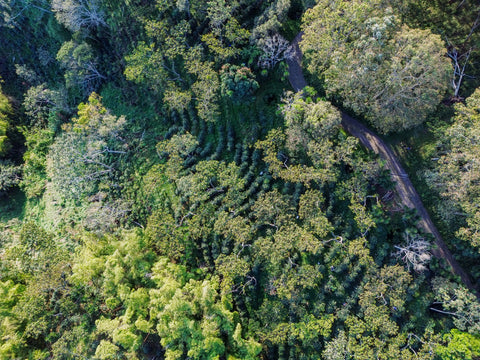
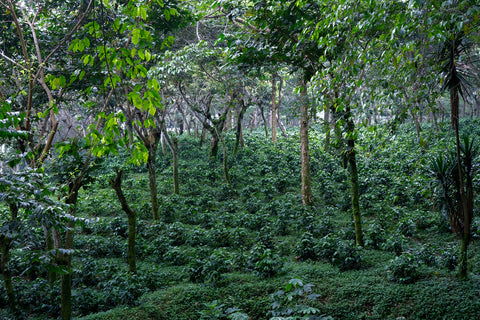
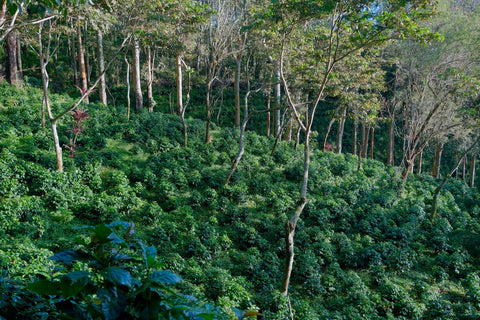
I first purchased coffee from FSJM for Aviary's first season, in 2024, and made a point of visiting the farm ahead of the 2025 season so see the farm and its industry-leading soil fertility management programs up close. And the truth is that what I saw at FSJM gives me hope: it offers, I think, a tangible demonstration of how a different approach to coffee production—a fully-organic forest system with diversified revenue streams—could offer not only greater resiliency for producers in the face of climate change, but also stability in the face of market volatility.
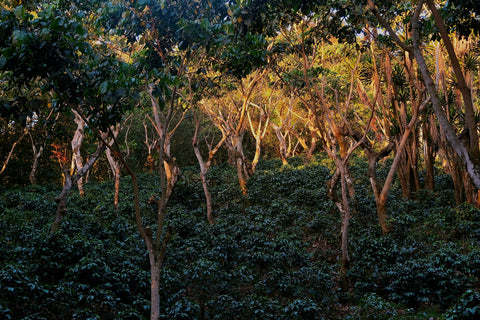
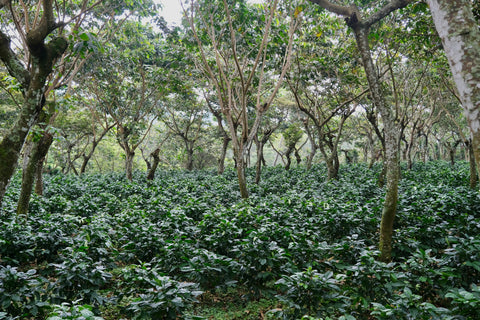
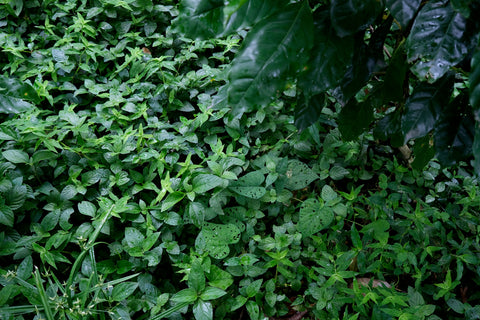
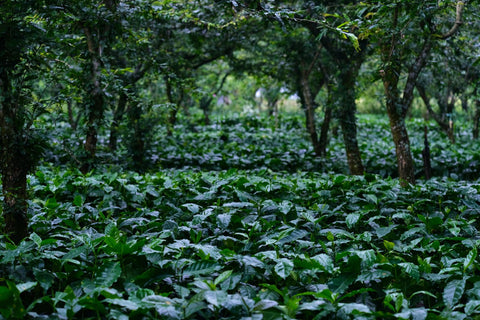
The focus at FSJM is the soil. I spent most of my visit last year with Giorgio Bressani, who manages the coffee production at FSJM, talking about nutrient cycling, and how layers of shade canopy create topsoil—improving humidity control, reducing the temperature of surface soil and feeder roots, mulching the trees with organic matter, preventing erosion and leeching of nutrients, and resulting in healthier, more disease- and climate-resistant trees.
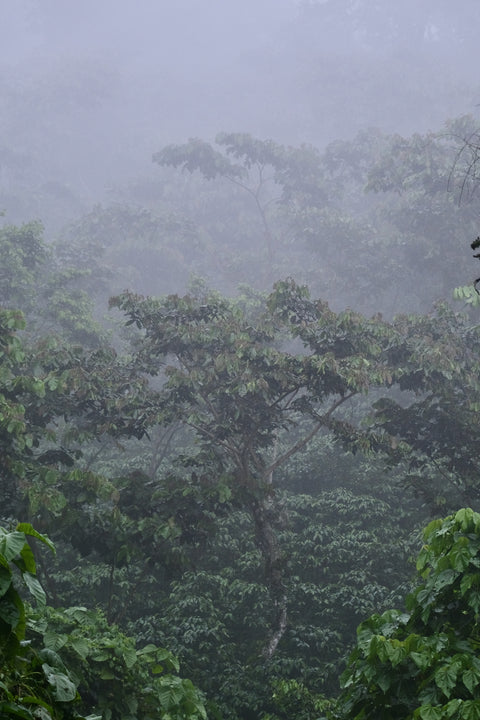
All of the efforts at FSJM don't just lead to healthier trees and more fertile soil—they create a microclimate. Walking just 10 meters at the edge of the farm to an adjacent property, I felt the texture of the topsoil change. Where on FSJM, topsoil is 3cm or more, here it was just a millimeter. the topsoil at FSJM below the surface is "cool enough to drink a beer" (all credit to Giorgio for that phrase) but at the adjacent farm, it's hot to the touch. The stress on the trees showed—with lower productivity and density in the nodes, less glossy leaves, higher defoliation, and a warmer ambient temperature.Economic resiliency and diversification is also at the heart of the system here. Coffee is just one revenue stream—also planted here are valuable cash crops like cacao, cardamom, fruits as well as hardwoods—with the the dairy operated by the family, first established by Giorgio's grandfather in the 1950s, providing true economic security. Even in difficult years for the coffee market, the farm is able to sustain not only the Bressani family but the hundreds of families who rely on the farm's operations for a living.
The scale of effort at FSJM is matched only by the ambition of the team—which includes not only Giorgio and his siblings but 350 highly trained and precisely deployed pickers and a professional staff of experts who oversee everything from the nursery and breeding operation to composting to the pasturing of cows and pruning and maintenance of trees to replication of mycelium and wasps to combat broca—not to mention processing, drying, milling, and export, nor the dairy factory nor hydroelectric plant that generates the power for the farm, dairy, mill and town.
The impressive infrastructure of FSJM is the work of literal generations—beginning with Giorgio's great-grandfather, Cesare, who started the family in coffee; expanded by his grandfather, Valentin, who built much of the infrastructure; re-invented by his father, Mark, the "Cheese Man" who laid the foundations for innovations in quality with a natural vision; and lived today by Giorgio and his siblings who brought the farm into the 21st century both in terms of farm practices and market access.
While some projects in coffee are either focused on cloning, pure genetics and certified seed, FSJM employs dynamic genetic management at its nursery and in the fields, actively selecting and breeding the best performing trees based on their characteristics (disease resistance, yield, cup performance) and those seemingly best adapted to the farm. This means intentionally allowing adaptation and evolution to happen—encouraging resiliency while selecting for desirable traits while reducing genetic bottlenecks. For this reason, FSJM has unique cultivars in its collection that outperform their traditional counterparts both on the table and in the field.